No Longer Human by Osamu Dazai: Summary, Characters, Themes, and Ending Explained
Updated: 4 hours ago
Osamu Dazai’s No Longer Human is one of the most unsettling and enduring works of twentieth-century Japanese literature. First published in 1948, the novel follows Yozo Oba, a man who feels fundamentally unable to understand other people or participate in ordinary human life. Told through a series of personal notebooks, his story unfolds as a deeply intimate account of fear, shame, loneliness, and self-destruction.
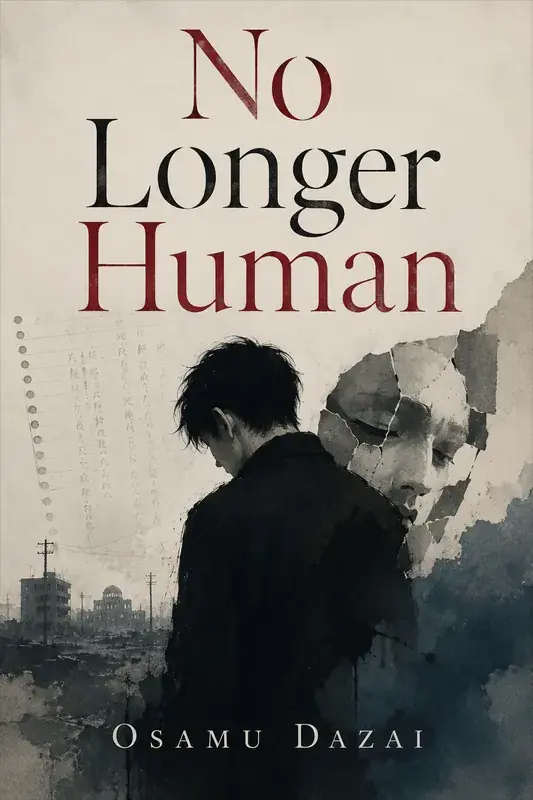
Rather than presenting alienation as a temporary emotional struggle, Dazai explores what it means to believe that one has failed at being human altogether. Yozo hides his anxiety behind jokes, charm, and exaggerated foolishness, but his performance only deepens the distance between his outward image and private despair. The result is a novel that is bleak, psychologically precise, and difficult to forget.
Although No Longer Human is often discussed in connection with Dazai’s troubled life, its power reaches beyond autobiography. It remains relevant because it confronts painful questions about identity, social pressure, mental suffering, and the desperate need to be accepted by others.
No Longer Human: Summary and Plot Overview
Spoiler warning: This section discusses the full plot of No Longer Human, including its final events and ending.
Osamu Dazai’s No Longer Human is presented as the private record of Yozo Oba, a troubled man who believes he has failed to become a real human being. The novel begins with a brief frame narrative. An unnamed narrator encounters three photographs of Yozo at different stages of his life: as a child, as a young man, and as an adult. Each image is disturbing in a different way, suggesting that something deeply fractured lies behind Yozo’s expression. The narrator then receives Yozo’s notebooks, which form the main body of the novel and reveal the experiences behind those photographs.
Yozo grows up in a wealthy and respected family in northern Japan, but he feels completely disconnected from those around him. From an early age, he is afraid of people because their emotions, habits, and expectations seem incomprehensible to him. Even simple social behavior feels like a secret code that everyone else understands naturally. Yozo cannot tell when people are sincere, cruel, selfish, or kind, and this uncertainty makes ordinary relationships feel dangerous.
To protect himself, he develops a role: the clown. Yozo learns that exaggerated jokes, foolish expressions, and constant playfulness can make others laugh and prevent them from seeing his fear. His humor is not a source of confidence or joy. It is a mask that allows him to survive social situations without revealing how alien he feels. Adults often find him charming, while classmates are entertained by his performances. Yet the more successful the act becomes, the more isolated Yozo feels, because nobody sees the person behind it.
One of the first people to notice that Yozo’s behavior is artificial is Takeichi, a quiet and observant classmate. While others accept Yozo’s clowning at face value, Takeichi recognizes that his laughter is forced. This moment frightens Yozo because it threatens the protective identity he has created. At the same time, Takeichi introduces him to art, encouraging him to draw and paint. Through this friendship, Yozo discovers that he can express some of his inner feelings through distorted and unsettling images. Still, art does not give him a stable sense of self; it becomes another space where he can reveal pain without truly being known.
Yozo’s childhood is also marked by experiences of exploitation and silence. He is abused by people who should have been safe around him, yet he feels unable to explain what has happened or ask for help. His fear of human beings becomes even stronger because he sees vulnerability as something that others can easily use against him. Rather than confronting these experiences, he buries them beneath shame and performance. The pattern of hiding, avoiding, and pretending continues into his adolescence.
When Yozo moves to Tokyo, he is expected to pursue a proper education and follow the respectable path his family has planned for him. Instead, he drifts further away from that future. He spends little energy on his studies and becomes attached to a bohemian life of drinking, nightlife, art studios, and political discussion. There, he meets Horiki, an older and more cynical man who becomes one of the strongest negative influences in his life. Horiki introduces Yozo to alcohol, gambling, prostitutes, and a lifestyle built around avoidance. Their friendship is not based on genuine understanding. Horiki sees Yozo as someone easy to lead, while Yozo is drawn to Horiki because he offers a temporary escape from responsibility and family expectations.
For a time, Yozo also becomes involved with left-wing political groups. However, his interest is less ideological than emotional. He joins partly because political rebellion gives him another role to play and partly because he wants to belong somewhere. He does not possess the conviction or courage needed to commit himself fully. When the risks become real, he retreats. His inability to stand for anything makes him feel even more fraudulent, as though he is only borrowing identities from other people without ever discovering his own.
As Yozo’s drinking becomes heavier, his life grows increasingly unstable. He begins relationships with women but cannot form lasting intimacy. He is drawn to people who appear vulnerable, lonely, or damaged, perhaps because their pain seems easier for him to understand than ordinary happiness. One of these women is Tsuneko, a bar hostess who is also struggling with despair. Their connection is shaped by shared hopelessness rather than love or mutual support. Together, they attempt suicide by drowning in the sea.
Tsuneko dies, but Yozo survives. This becomes a defining turning point in the novel. He is left burdened by guilt, though even his guilt is complicated by emotional numbness and self-disgust. His family reacts not with deep understanding but with embarrassment and practical concern. They want to manage the scandal and restore order, while Yozo feels that his inner collapse has only become more severe. After the suicide attempt, he is placed under the supervision of a family acquaintance and pressured to return to a more respectable way of living.
Yozo later enters a relationship with Shizuko, a woman who supports him emotionally and materially. She has a young daughter, Shigeko, and for a brief period, Yozo experiences something close to domestic stability. Shizuko believes in his artistic ability and encourages him to write. Yet Yozo cannot accept the possibility of being needed or loved. The quiet responsibilities of family life frighten him, and he eventually leaves. His departure reveals a central contradiction in his character: he longs for connection, but the moment connection becomes real, he feels trapped and unworthy.
Afterward, Yozo marries Yoshiko, a gentle and trusting woman whose innocence initially seems to offer him a new beginning. Their marriage is one of the novel’s most painful sections because Yozo briefly imagines that he might escape his past. Yoshiko’s openness and simple faith in people appear almost miraculous to him. He believes that her trust may allow him to live differently, without constant suspicion and self-hatred.
That hope does not last. When Yoshiko is sexually exploited by another man, Yozo is devastated. Rather than directing his anger toward the person responsible, he becomes obsessed with the destruction of Yoshiko’s innocence. For Yozo, her trust had represented the possibility that human goodness existed. Once that trust has been violated, he feels that the world has confirmed his darkest beliefs. He returns more completely to alcohol and self-destruction, unable to separate Yoshiko’s suffering from his own despair.
Yozo’s condition worsens as he becomes dependent on morphine and loses control over his life. His relatives eventually intervene, but their solution is not compassionate understanding. He is sent away to an institution, which he experiences as a kind of living death. In his mind, being confined there confirms what he has believed all along: that he is no longer part of humanity and has become something separate, broken, and irredeemable.
The notebooks end with Yozo living in isolation in a rural area, emotionally exhausted and detached from the life he once knew. The frame narrative then returns. The woman who knew Yozo as a child remembers him differently from the damaged figure described in the notebooks. She calls him an angel, suggesting that Yozo’s self-image may not be the entire truth. This final contrast does not erase the tragedy of his life, but it leaves readers with an important question: was Yozo truly incapable of being human, or was he a deeply wounded person who could never believe that he belonged among others?
Main Characters in No Longer Human
Yozo Oba
Yozo Oba is the novel’s central character and narrator of the three notebooks that make up most of No Longer Human. He is a deeply isolated man who believes he does not understand other people and cannot live according to the ordinary rules of society. From childhood onward, Yozo experiences human relationships as frightening and confusing. He cannot easily recognize sincerity, affection, cruelty, or social expectation, so he responds by hiding his real feelings behind a comic performance.
His role as a clown becomes the defining feature of his public identity. Yozo makes people laugh because laughter protects him from scrutiny. When others see him as entertaining, harmless, and cheerful, they do not notice his anxiety or despair. Yet this strategy also prevents him from forming genuine relationships. He becomes trapped between the version of himself that others enjoy and the private self he believes nobody could accept.
Yozo is not presented as a simple victim or a straightforwardly sympathetic hero. He suffers intensely, but he also hurts other people through avoidance, addiction, dishonesty, and emotional withdrawal. His relationships often collapse because he cannot accept care without feeling ashamed or suspicious. The novel’s tragedy lies partly in this contradiction: Yozo longs to be understood, but his fear of exposure makes understanding almost impossible.
Takeichi
Takeichi is one of Yozo’s earliest classmates and one of the few people who sees through his false cheerfulness. Unlike the other children, Takeichi understands that Yozo’s clowning is not natural. He recognizes that the jokes, funny faces, and exaggerated behavior are part of a performance. This awareness alarms Yozo because it threatens the only defense he has developed against the world.
At the same time, Takeichi plays an important role in Yozo’s artistic development. He encourages Yozo to draw and gives him a new way to express emotions that are difficult to speak aloud. Through art, Yozo begins to create strange, distorted figures that reflect his alienation more honestly than his social behavior ever can. Takeichi, therefore, represents both danger and possibility: he is dangerous because he sees Yozo’s hidden self, but valuable because he offers a path toward expression without mockery.
Takeichi does not remain a major presence throughout the novel, yet his importance lasts. His ability to recognize Yozo’s suffering suggests that Yozo is not completely invisible to others. Even early in life, someone is capable of seeing beyond the mask. Yozo’s later belief that nobody could understand him may therefore be partly true, but it is not the whole truth.
Horiki
Horiki is an older acquaintance who becomes one of the strongest destructive influences in Yozo’s adult life. He introduces Yozo more fully to drinking, gambling, prostitution, and a drifting bohemian lifestyle. Horiki appears confident, cynical, and socially capable in ways that Yozo is not. He understands how to manipulate social situations and often treats moral values as something flexible or performative.
Yozo is drawn to Horiki because Horiki offers a form of companionship without emotional demands. Their friendship allows Yozo to escape his family’s expectations and avoid confronting his own fears. However, Horiki does not provide real guidance or support. Instead, he encourages Yozo’s worst tendencies, reinforcing his belief that self-destruction is easier than responsibility.
The relationship between the two men also reveals a contrast between different forms of alienation. Horiki is cynical but adaptable; he can move through society while remaining emotionally detached from it. Yozo, by contrast, cannot maintain that balance. He lacks Horiki’s practical resilience and becomes overwhelmed by shame. Horiki can treat life as a game, but Yozo experiences each failure as proof that he is fundamentally unfit to live among other people.
Tsuneko
Tsuneko is a bar hostess whom Yozo meets during one of the lowest periods of his life. Their relationship is shaped by loneliness, despair, and mutual emotional exhaustion. Yozo does not seem capable of loving Tsuneko stably or generously, but he recognizes in her a suffering that resembles his own. Their connection is less a source of healing than a temporary refuge from the world.
Together, Yozo and Tsuneko attempt suicide by drowning. Tsuneko dies, while Yozo survives. Her death becomes a source of guilt that he cannot escape, though his guilt is tangled with self-pity and emotional numbness. He does not know how to mourn healthily, just as he does not know how to live healthily.
Tsuneko’s role in the novel is crucial because she shows the danger of Yozo’s need to find comfort in shared despair. Instead of seeking relationships that might challenge or stabilize him, he is drawn toward people whose pain confirms his own hopeless view of life. The tragedy is not only that Tsuneko dies, but that Yozo survives without becoming more capable of connection or change.
Shizuko
Shizuko is a woman who gives Yozo one of his briefest experiences of security and domestic life. She supports him financially and emotionally, and she encourages his writing. As the mother of a young daughter, Shigeko, Shizuko represents a possible version of adulthood that Yozo might have entered: work, responsibility, affection, and a place within a family.
For a short time, Yozo seems able to live more calmly with Shizuko. He writes, spends time with her daughter, and experiences a form of belonging that contrasts sharply with his earlier chaos. Yet he cannot sustain it. The expectations attached to family life make him feel fraudulent and trapped. Rather than allowing himself to become part of Shizuko’s household, he leaves.
Shizuko is important because she demonstrates that Yozo is not entirely incapable of tenderness. His interactions with her and Shigeko show that he can respond to kindness and even feel moments of peace. However, these moments are fragile because Yozo’s self-hatred convinces him that he will eventually destroy anything good that comes close to him.
Yoshiko
Yoshiko is Yozo’s wife and one of the novel’s most significant symbols of trust and innocence. She is gentle, sincere, and unusually open toward other people. Yozo is deeply affected by her lack of suspicion. In a world that he believes is full of hidden motives and cruelty, Yoshiko’s trust appears almost unbelievable to him. He sees it as a rare form of purity.
For a while, Yoshiko gives Yozo hope that he may be able to begin again. Her presence suggests that love might exist without deception, fear, or performance. However, this hope is destroyed when Yoshiko is sexually exploited by another man. Yozo is unable to recover from the event, not only because of what happened to her, but because it shatters his belief in the possibility of innocence.
Yoshiko’s role is especially tragic because she becomes tied to Yozo’s emotional collapse even though she is not responsible for it. Her suffering exposes the limits of Yozo’s ability to care for others. Instead of supporting her, he turns inward, allowing his despair to become the center of the crisis. Through Yoshiko, the novel shows how trauma can spread through relationships when pain is met with shame, silence, and self-destruction.
Main Themes and Ideas in No Longer Human
Alienation and the Fear of Other People
The central theme of No Longer Human is alienation. Yozo Oba does not simply feel lonely; he believes that he is fundamentally separate from other people. Human behavior appears mysterious and threatening to him. He cannot understand why people laugh, make conversation, follow social rules, or hide their true motives. What others experience as ordinary daily life feels to Yozo like a confusing performance whose rules he has never learned.
This fear shapes every part of his life. Instead of approaching people honestly, Yozo watches them from a distance and tries to imitate their behavior. He wants to belong, but he is convinced that any attempt at genuine connection will expose him as abnormal or defective. His alienation, therefore, becomes self-reinforcing: the more he hides, the less others can know him, and the more isolated he feels.
Dazai presents alienation not as a dramatic rejection of society but as a quiet and persistent inability to feel safe within it. Yozo is surrounded by family, classmates, friends, lovers, and acquaintances, yet he remains emotionally alone. The novel suggests that loneliness can exist even in the presence of other people when a person feels unable to reveal their true self.
Performance, Masks, and the Role of the Clown
Yozo survives social life by becoming a clown. As a child, he discovers that making people laugh can protect him from attention. His jokes, strange expressions, and exaggerated behavior create an image of someone cheerful and harmless. In reality, this image is a carefully constructed mask. Yozo does not perform because he enjoys entertaining others; he performs because he is terrified of being seen seriously.
The clowning becomes one of the novel’s most important symbols. It represents the gap between Yozo’s public identity and private suffering. Other people think they know him because they see his humor, but they only see the version of himself that he has designed for their comfort. His performance succeeds so well that it becomes impossible for him to stop. Even when he wants to be understood, he has no language for honesty beyond laughter, exaggeration, and self-mockery.
This theme remains powerful because many people recognize the pressure to appear normal, happy, or confident in public. Yozo’s experience is extreme, but the novel raises a familiar question: how much of a person’s social identity is genuine, and how much is a role created to avoid rejection? Dazai shows that a mask can begin as protection and eventually become a prison.
Shame and Self-Disgust
Shame is one of the strongest emotions in No Longer Human. Yozo does not merely regret individual mistakes; he sees himself as deeply flawed at the level of identity. He believes that he is weak, dishonest, cowardly, and incapable of living properly. This self-disgust makes it difficult for him to accept help, because he assumes that anyone who sees the truth about him will eventually reject him.
His shame is closely connected to his fear of judgment. Yozo constantly imagines how others might view him, even when they are not openly criticizing him. He assumes that society has a clear standard for what a respectable person should be: disciplined, responsible, emotionally stable, and morally reliable. Because he cannot meet that standard, he concludes that he is not fully human.
Dazai does not present Yozo’s shame as purely private. It is shaped by family expectations, social reputation, masculinity, and the demand to behave respectably. Yozo’s wealthy background makes his failures feel even more humiliating because he is expected to succeed. Yet the novel also shows how destructive it can be when a person turns every weakness into evidence of total worthlessness. Yozo’s shame prevents him from changing because he no longer believes that change is possible.
The Desire for Connection and the Inability to Trust
Although Yozo often withdraws from people, he is not indifferent to them. He wants affection, understanding, and safety. His relationships with women, friends, and family show that he repeatedly searches for someone who might accept him without judgment. However, he cannot trust the connection once it appears. Kindness makes him uncomfortable because he suspects it will disappear, become conditional, or reveal hidden motives.
This contradiction gives the novel much of its emotional force. Yozo wants to be close to others, but closeness also frightens him. He leaves people who care for him, damages relationships through drinking and avoidance, and interprets affection as something he does not deserve. His actions often create the isolation he fears most.
Yoshiko’s trust is especially important in this context. Yozo sees her openness as rare because he believes most human relationships are based on deception or calculation. For a short time, her presence gives him hope that trust may be possible. But when that trust is violated, he is unable to recover. The event confirms his darkest assumptions about people and pushes him further into despair.
Through Yozo’s failed relationships, Dazai shows that connection requires vulnerability. A person cannot be fully known while constantly hiding behind a role. Yet the novel also recognizes how difficult vulnerability can be for someone who has learned to associate honesty with danger.
Self-Destruction and Escapism
Yozo repeatedly turns to alcohol, drugs, sex, gambling, and reckless behavior as forms of escape. These actions do not solve his problems, but they give him temporary relief from anxiety and self-awareness. Rather than confronting his fear of people or his sense of worthlessness, he tries to numb himself. Each escape creates new consequences, which then become further reasons for shame.
The novel does not romanticize Yozo’s destructive behavior. His drinking and addiction are not signs of rebellion or freedom; they are evidence of his inability to cope. He is not choosing a glamorous bohemian life. He is drifting through experiences that make him less capable of taking responsibility for himself or caring for others.
At the same time, Dazai avoids turning Yozo into a simple moral lesson. His self-destruction comes from emotional pain, but pain does not remove responsibility. Yozo is harmed by others, yet he also harms people around him. The novel remains disturbing because it refuses to separate suffering from consequence. A person can be deeply wounded and still cause damage.
Society, Respectability, and the Pressure to Belong
No Longer Human also examines the pressure to appear respectable. Yozo comes from a privileged family that expects him to follow a conventional path. He should study, build a career, marry properly, and protect the family’s reputation. Instead, he repeatedly fails to meet these expectations. His family often responds to his problems as scandals to be managed rather than signs of emotional crisis.
This social pressure intensifies Yozo’s belief that he is an outsider. He sees society as a system that rewards people who can perform normality convincingly. In one sense, Yozo is very skilled at performance: he can make people laugh and appear charming. But he cannot sustain the deeper forms of social conformity that adult life demands. He lacks the stability needed to turn performance into a lasting identity.
Dazai’s criticism of society is subtle but significant. The novel does not claim that social rules are meaningless, yet it questions the cruelty of judging people only by whether they appear successful, sober, productive, or respectable. Yozo’s collapse is personal, but it takes place in a world that has little patience for weakness that cannot be hidden.
What Does It Mean to Be “Human”?
The title No Longer Human expresses Yozo’s belief that he has fallen outside ordinary human life. He sees himself as someone who cannot love properly, work responsibly, trust others, or control his destructive impulses. In his mind, these failures make him less than human.
However, the novel leaves this judgment unsettled. Yozo’s suffering, fear, guilt, and desire to be understood are all deeply human experiences. His problem may not be that he lacks humanity, but that he has defined humanity too narrowly. He believes that a human being must be socially competent, morally strong, emotionally stable, and able to live without fear. Because he cannot meet these impossible standards, he condemns himself completely.
The closing perspective of the novel complicates Yozo’s self-image even further. Others may remember him differently from how he remembers himself. This does not erase the damage he causes or the pain he endures, but it suggests that no person can be fully defined by their own harshest judgment.
Ultimately, No Longer Human is not only about one man’s decline. It is about the danger of believing that weakness, shame, and alienation make someone unworthy of belonging. Dazai’s novel remains haunting because it asks whether a person can still be human even when they no longer believe they are.
Confession, Autobiography, and the Unreliable Narrator
One of the most striking features of No Longer Human is its confessional form. The novel is largely told through Yozo Oba’s notebooks, which give readers direct access to his fears, memories, and harsh judgments of himself. This structure makes the story feel intensely personal. Yozo does not describe his life as a series of objective events; he presents it as evidence in a case against himself. Nearly everything he recalls seems to support his belief that he is weak, fraudulent, and fundamentally unable to belong among other people.
Because the novel is written in this deeply private voice, readers are placed very close to Yozo’s suffering. His shame, fear, and loneliness are difficult to dismiss because they are not explained from a distance. Instead, they emerge through small moments of embarrassment, failed relationships, self-destructive choices, and his constant effort to hide behind humor. The notebooks create the feeling that Yozo is finally saying what he could never say openly to another person.
However, this closeness also raises an important question: can Yozo be trusted as the sole interpreter of his own life?
Yozo is not unreliable because he is deliberately trying to deceive the reader. In fact, he often seems painfully determined to expose his own flaws. His unreliability comes from the intensity of his self-hatred. He sees almost every failure as proof that he is beyond redemption, and he rarely allows room for a more forgiving explanation. When people show him kindness, he doubts it. When someone seems to understand him, he pulls away. When a relationship offers stability, he assumes he will destroy it. His view of himself is so negative that it becomes difficult to know where reality ends and self-condemnation begins.
This is especially clear in the novel’s framing device. Before Yozo’s notebooks begin, an unnamed narrator sees three photographs of him at different stages of life. The images suggest a man whose face has become increasingly strange and empty, preparing readers for the bleakness of his story. Yet at the end of the novel, a woman who knew Yozo as a child remembers him in very different terms. She calls him an angel. Her memory does not erase the damage in Yozo’s notebooks, but it challenges the idea that he can be understood only through his own worst judgment.
This contrast is essential to the novel. Yozo sees himself as someone who has become less than human, while another person remembers him as gentle and innocent. Neither perspective is entirely complete. Yozo’s notebooks reveal real pain, real harm, and real responsibility, but they also reveal a man who cannot recognize any trace of goodness in himself. Dazai leaves readers in the uncomfortable position of having to hold both truths at once.
The novel is often described as autobiographical because Yozo’s life shares important similarities with Osamu Dazai’s own experiences. Like Yozo, Dazai came from a wealthy family, struggled with addiction, lived through political disillusionment, and wrote openly about shame, alienation, and self-destructive behavior. These parallels make No Longer Human feel emotionally connected to the author’s life, especially because Dazai’s writing often draws on personal experience.
Still, it is important not to treat Yozo as a simple portrait of Dazai. The novel is not a diary, and Yozo is not merely the author under another name. Dazai shapes Yozo’s story carefully, using him to explore larger questions about identity, isolation, performance, and despair. The character’s voice is highly crafted. His suffering may have autobiographical roots, but it is transformed into fiction through symbolism, structure, and psychological intensity.
Reading the novel only as a record of Dazai’s life can also limit its meaning. Yozo’s experiences are specific to his time, place, and personal history, yet the emotions behind them are broader. Many readers recognize the fear of being exposed, the pressure to appear normal, or the feeling of performing a version of oneself for others. The novel’s power comes partly from the fact that Yozo’s voice is both intensely individual and painfully familiar.
The confessional style also creates a difficult moral tension. Yozo describes himself as helpless, but he is not free from responsibility. He is harmed by exploitation, addiction, and emotional isolation, yet he also makes choices that hurt people around him. His relationships with Tsuneko, Shizuko, and Yoshiko show that suffering does not automatically make a person innocent. Dazai does not ask readers to excuse Yozo completely. Instead, he asks them to consider how shame can distort a person’s ability to act, love, and accept help.
Ultimately, the notebooks in No Longer Human are not a final explanation of Yozo’s identity. They are the testimony of a man who believes he has already been condemned. The novel’s frame narrative quietly resists that conclusion. By showing that others may have seen Yozo differently, Dazai suggests that no person should be defined entirely by their own despair. Yozo may feel cut off from humanity, but his longing to be understood is itself one of the most human things about him.
Writing Style, Symbolism, and the Meaning of the Title
Osamu Dazai’s writing in No Longer Human is simple on the surface but emotionally intense underneath. The prose is not ornate or heavily descriptive. Instead, it is direct, restrained, and confessional, which makes Yozo’s suffering feel more immediate. He does not speak in dramatic speeches or carefully organized arguments. His thoughts often move through shame, fear, memory, and self-accusation, giving the novel the unsettling feeling of reading someone’s private record rather than a conventional story.
This plain style is one reason the novel is so powerful. Dazai avoids making Yozo’s pain seem poetic or glamorous. Even when the narrator describes destructive behavior, the tone remains exhausted rather than rebellious. Alcohol, drugs, failed relationships, and social humiliation are not presented as exciting forms of escape. They are part of a slow emotional decline. The language reflects this: Yozo often sounds detached from his own life, as though he is observing his failures from a distance but lacks the strength to change them.
The novel’s structure also contributes to this sense of intimacy. Most of the story is told through Yozo’s notebooks, which divide his life into stages rather than offering a fully objective account. Readers see childhood, adolescence, and adulthood through his damaged perspective. This form makes the novel feel fragmented because Yozo himself feels fragmented. He cannot create a stable identity, so his story becomes a record of masks, breakdowns, and attempts to escape himself.
Masks, Laughter, and Performance
One of the most important symbols in No Longer Human is the mask. Yozo does not literally wear one, but his comic behavior serves the same purpose. As a child, he learns to make others laugh so that they will not notice his terror of human interaction. His jokes and exaggerated expressions become a shield. When people laugh, Yozo feels temporarily safe because he is controlling the situation.
However, the mask also separates him from others. People respond to the version of Yozo that entertains them, not to the frightened person underneath. The more successfully he performs, the harder it becomes for him to speak honestly. His humor is therefore both a survival strategy and a trap.
Laughter appears throughout the novel as something complicated and sometimes frightening. For many people, laughter suggests comfort, friendship, or happiness. For Yozo, it often becomes a way to prevent intimacy. He makes others laugh so that nobody will ask serious questions about him. The novel suggests that a cheerful appearance can hide deep distress, especially when a person feels unable to show vulnerability directly.
The Three Photographs
The three photographs at the beginning of the novel are another important symbol. They show Yozo at different points in his life, but each image seems strange or unsettling. The photographs suggest that Yozo’s disconnection is visible even before readers know his story. They create the impression that something is wrong beneath his expression, even when he appears to be smiling.
The first photograph presents him as a child, already performing happiness in a way that feels unnatural. The second shows a young man whose smile appears empty or artificial. The final photograph is the most disturbing, suggesting a person who has become almost unrecognizable to himself and others. Together, the images trace Yozo’s psychological decline.
At the same time, photographs are limited objects. They capture an appearance, not a full human being. This matters because No Longer Human repeatedly questions whether anyone can truly see another person. The photographs make Yozo seem distant and unknowable, yet his notebooks reveal intense emotion beneath the surface. Dazai uses this contrast to show the gap between outward appearance and inner life.
Art and Distorted Vision
Art plays a quieter but meaningful role in the novel. Yozo is introduced to drawing by Takeichi, who recognizes that Yozo’s clowning is a performance. Through painting, Yozo finds a way to express what he cannot explain in ordinary conversation. His drawings are not conventional portraits of people; they are distorted and unsettling. He is drawn toward images that reveal something ugly, strange, or emotionally exposed beneath the human face.
These artistic images reflect Yozo’s view of the world. He believes that ordinary social behavior hides something false, and his art allows him to show the fear and absurdity he senses beneath respectable appearances. In this way, drawing becomes one of the few forms of honesty available to him.
Yet art does not save Yozo. It gives him expression, but not stability. He can create images that reveal his inner pain, but he cannot use those images to build a healthier relationship with himself or other people. This is part of the novel’s tragedy: insight does not automatically lead to recovery.
Alcohol and Escape
Alcohol is one of the clearest symbols of escape in No Longer Human. Yozo drinks because it allows him to avoid fear, shame, and self-awareness. For a short time, alcohol makes social life easier. It dulls the anxiety that makes him feel exposed around others. But the relief is temporary, and each act of escape deepens his dependence.
Dazai does not treat alcohol as the cause of all of Yozo’s suffering. His alienation exists long before his addiction becomes severe. However, drinking turns his emotional pain into a cycle of self-destruction. He drinks to escape shame, then feels more ashamed because of what he does while drinking. The same pattern later appears in his use of morphine and other harmful habits.
Alcohol, therefore, represents Yozo’s central problem: he wants relief from himself but has no way to imagine a life beyond avoidance. He repeatedly chooses temporary numbness over difficult honesty, even when he understands that the choice is destroying him.
The Meaning of No Longer Human
The title No Longer Human expresses Yozo’s belief that he has fallen outside the boundaries of ordinary human life. He sees other people as capable of trust, work, friendship, love, and responsibility, while he sees himself as incapable of all of them. In his mind, he is not simply unhappy or flawed. He is something less than human.
This title is deliberately painful because readers can see that Yozo’s emotions are deeply human. His fear of rejection, his longing for acceptance, his guilt, and his desire to be understood all connect him to other people, even when he cannot recognize that connection himself. The title reflects his self-judgment, not necessarily the novel’s final judgment of him.
Dazai leaves readers with an important tension. Yozo believes that he has lost his humanity because he cannot live according to society’s expectations. But the novel suggests that humanity may include weakness, confusion, failure, and emotional suffering as much as confidence or stability. Yozo’s tragedy is not that he is inhuman. It is that he becomes convinced that his pain makes him unworthy of belonging.
Through its stripped-back prose, recurring images, and devastating title, No Longer Human turns one man’s private despair into a broader reflection on identity. The novel asks how much of ourselves we hide from others, how easily shame can become a prison, and whether anyone should be defined only by the version of themselves they fear most.
Ending Explained: Why No Longer Human Still Resonates
The ending of No Longer Human does not offer Yozo Oba a clear recovery, redemption, or sense of peace. After years of fear, addiction, broken relationships, and emotional collapse, he is removed from ordinary life and sent to an institution by people connected to his family. Yozo experiences this confinement as the final proof that he has failed. He no longer sees himself as a troubled man who might recover; he sees himself as someone permanently excluded from humanity.
This conclusion is devastating because Yozo has spent the entire novel believing that he does not belong among other people. He cannot trust their kindness, understand their behavior, or accept the possibility that he might be forgiven. By the final pages, his self-image has become almost fixed. He has turned shame into an identity. Rather than saying that he has made terrible mistakes, he believes that he is nothing but a mistake.
Yet Dazai does not allow Yozo’s judgment to become the novel’s only truth.
The final frame narrative complicates everything that came before. After reading Yozo’s notebooks, the unnamed narrator speaks with a woman who knew him when he was younger. Her memory of Yozo is strikingly different from the person described in his own writing. Instead of seeing him as monstrous, corrupt, or inhuman, she remembers him as an angel.
Her comment is brief, but it changes the emotional meaning of the ending. It does not erase Yozo’s suffering, his destructive behavior, or the harm he has caused. Dazai does not suddenly reveal that Yozo’s life was misunderstood or that all his problems were imaginary. However, the woman’s memory suggests that Yozo’s self-hatred may not be an accurate measure of his worth. He has interpreted every weakness as proof that he is beyond saving, while someone else remembers tenderness and innocence in him.
This contrast is central to the novel’s final message. Yozo is trapped inside his own perspective. Because the story is told through his notebooks, readers spend most of the novel inside a mind that is relentlessly hostile toward itself. Yozo rarely gives himself the same compassion that he might give another suffering person. He assumes that every failure reveals his true nature, while every moment of kindness is temporary, accidental, or undeserved.
The ending, therefore, asks readers to question whether a person’s most painful self-description should be accepted without challenge. Yozo believes he is “no longer human,” but the novel repeatedly shows that his fear, guilt, loneliness, and longing to be understood are deeply human. His tragedy is not that he lacks humanity. It is that he cannot recognize his own humanity once he has failed to meet the standards he imagines society requires.
The novel also remains powerful because it refuses to provide an easy explanation for Yozo’s suffering. His decline cannot be traced to one event, one person, or one moral failure. His childhood fear, experiences of exploitation, dependence on alcohol and drugs, unstable relationships, family pressure, and inability to trust all contribute to his collapse. Dazai presents suffering as complex and cumulative. Yozo does not fall apart in a single dramatic moment; he gradually loses the ability to imagine another way of living.
Modern readers continue to connect with No Longer Human because its emotional concerns remain recognizable. Yozo’s world is different from the present day, but the pressure to perform a socially acceptable identity is still familiar. Many people understand the feeling of pretending to be cheerful, capable, or confident while privately struggling. Yozo’s clowning may be extreme, but it reflects a common fear: that being honest about pain will lead to rejection.
The novel also speaks to readers because it portrays isolation in a particularly unsettling way. Yozo is rarely completely alone. He has family members, friends, lovers, drinking companions, and people who attempt to help him. Yet none of these relationships fully reaches him because he cannot believe that he deserves care or that anyone could understand him. Dazai shows that loneliness is not simply the absence of people. It can come from feeling unseen even when others are nearby.
Another reason the book remains relevant is its refusal to romanticize self-destruction. Yozo’s drinking, addiction, sexual behavior, and withdrawal might seem at first like signs of rebellion against social expectations. But the novel makes clear that these choices do not free him. They only deepen his dependence, shame, and helplessness. His life becomes smaller rather than more independent. This honesty gives No Longer Human much of its lasting force.
At the same time, the book’s bleakness should not be mistaken for a simple endorsement of despair. The final perspective, especially the woman’s memory of Yozo, introduces a fragile possibility that he was more than the identity he gave himself. The novel does not say that love alone can cure suffering or that every broken relationship can be repaired. Instead, it suggests that self-condemnation is incomplete. A person may be more complicated, more vulnerable, and more worthy of compassion than they are able to believe.
Ultimately, No Longer Human endures because it captures the frightening distance that can grow between a person’s outward life and inner reality. Yozo appears to others as humorous, charming, irresponsible, or troubled, but inside, he is consumed by fear and shame. Dazai’s novel asks readers to look beyond appearances and to consider how easily someone can mistake emotional pain for personal worthlessness.
Its final effect is not comfort, but recognition. No Longer Human remains unforgettable because it gives serious attention to feelings that are often hidden: the fear of being exposed, the exhaustion of performing for others, the damage caused by shame, and the desperate wish to be accepted without having to pretend.


Comments